The Tool Always Wins. The Question Is Who's Holding It
Article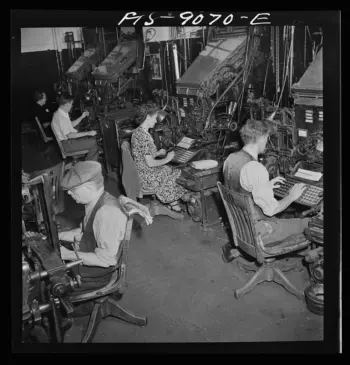
Every generation of professionals has stood in front of a new tool and said the same things. This will produce inferior work. This will deskill the craft. This rewards the ignorant and punishes the experienced.
They were always partially right. And the tool won anyway.
I spend my days between three groups of people dealing with the same question. The developers I build Builderius with, who pioneered a context-aware AI integration into a WordPress builder. The colleagues I teach alongside, who experiment with AI in their own practice. And the students entering a profession that is reshaping itself while they learn it. I am not dismissing the objections to AI. I hear them every week from people I respect. I am saying I have heard them before. And the pattern they follow is older than any of us.
1985: The last time this happened at this scale
On January 23, 1985, Steve Jobs demonstrated the first integrated desktop publishing system. Paul Brainerd, a former newspaper production manager who cared deeply about kerning and insisted on proper curly quotation marks, had coined the term “desktop publishing“ the year before. [1]
The reaction from professionals was immediate and furious.
Massimo Vignelli, one of the most celebrated designers of the twentieth century, watched the flood of amateur output and declared:
“If all people doing desktop publishing were doctors, we would all be dead.“ [2]
He called the proliferation of digital typefaces “one of the biggest visual pollution of all times.“ He was not wrong. The early output was genuinely terrible. The “ransom note effect“, untrained users mixing fonts with reckless enthusiasm, was pervasive.
But here is what happened next.
Zuzana Licko, Erik Spiekermann, Nadine Chahine, Matthew Carter, Jonathan Hoefler, Tobias Frere-Jones, they created landmark typefaces using the very tools Vignelli despised. Typography did not die. It flourished. Graphic designers absorbed the functions previously performed by typesetters, paste-up artists, and strippers. The craft moved up the abstraction ladder.
Typesetting did not go away; it just moved to a different place.
The full transition took ten to fifteen years. The quality gap closed substantially by the early-to-mid 1990s as software matured and users gained skill.
We are in year one. Or is it year two?
Paul Brainerd died in February, 2026. Weeks before I sat down to write this.
“From today, painting is dead“
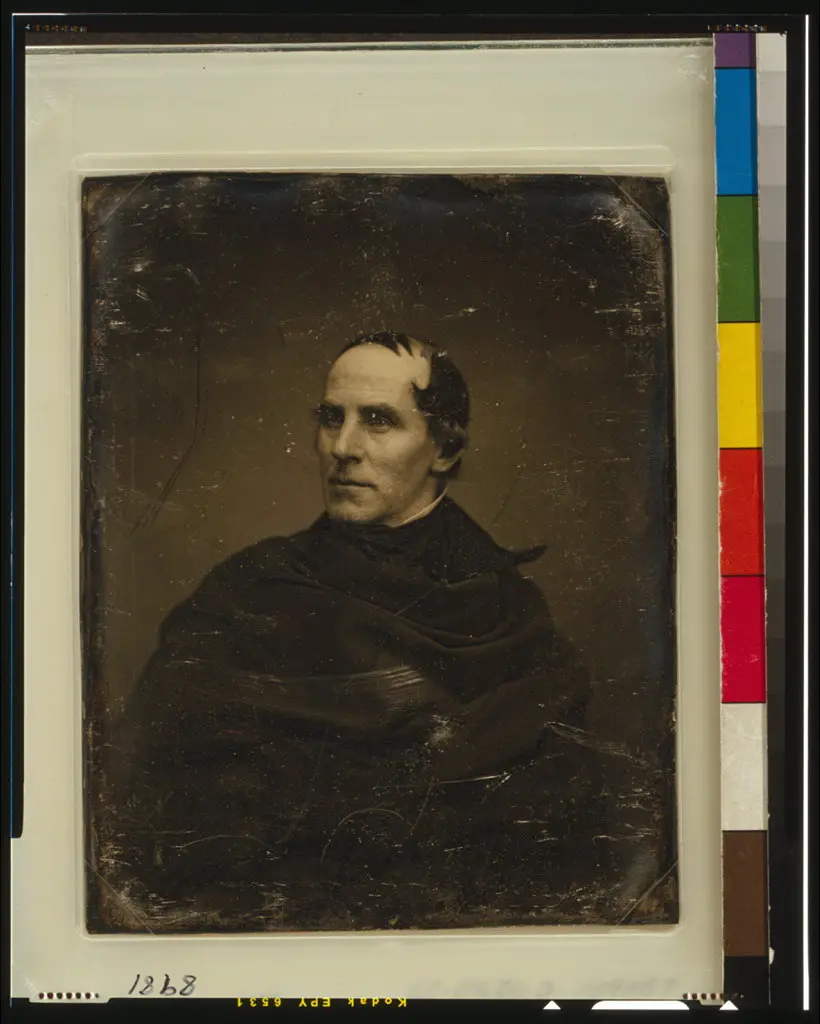
The quote is attributed to the painter Paul Delaroche upon seeing the daguerreotype in 1839. Photography did not kill painting.[3] It freed painting from the burden of representation and forced it toward expression and meaning. Impressionism, Expressionism, Cubism, Surrealism, none of it would happen if painters were competing with cameras.
When a machine handles execution, what gets freed?
The legitimate objections, taken seriously
The concerns I read in comment sections, about maintenance burdens, about liability when AI-generated code breaks in production, about skill atrophy, about cost trajectories when every AI company is running at a loss, these are not ignorant. They are the same concerns typesetters raised in 1986. They were partially right then. They are partially right now.
This moment mirrors 1987, not 1997. We are early. The quality gap is here. But this is not an argument against the direction. It is an argument about timing and architecture.
Skill atrophy is a real risk. It is also a choice.
Glen Keane spent nearly four decades at Disney. One of the most celebrated animators. When the studio moved to CGI, he was asked: if you can do all this cool stuff, but you have to give up the pencil to do it, are you in? He said yes. He remained one of the best animators. The tool changed. The judgment did not. [4] I do not gloss over this. People lost careers. People lost identities that were tied to a physical tool, the pencil, the typesetting machine.
But atrophy happens to people who stop thinking, not to people who adopt new tools.
The developers who hand the keys over entirely, who turn their full output over to AI without understanding what it produces, yes, that is a gamble. The developers who use AI to advance what they already understand are not gambling. They are positioning.
The most responsible approach is the hybrid one. Stay engaged with the craft. Maintain your skills and curiosity. Use AI where it makes you faster or better without making you dumber. That is not a radical position. It is exactly what every professional who survived a tool transition has done, from typesetters who became desktop publishers to animators who learned Maya.
The translation problem, and why I think architecture is the whole question
Generic AI on top of complex systems produces generic output. Not because AI is weak, because the integration is wrong. When AI generates code in a language it knows well, and then that code has to be converted. Each conversion degrades fidelity. The problem is not the model. It is the architecture of the connection.
We solved it differently with Builderius Sense AI. Sense does not translate. It speaks Builderius directly, it knows the element tree, the CSS framework, the data structure. There is no conversion step. When I say context-aware, I do not mean it has a system prompt that says “you are a WordPress builder.“ I mean it can see what element is selected, what CSS classes are applied, what data queries are connected, what breakpoints exist. It reads and writes the same JSON the builder reads and writes. Context is not a feature. It is the foundation.
We worked with Tobi Salami on a video that shows this in practice. One prompt. Custom post type registered. ACF fields created via WP-CLI. Field groups connected. Dynamic data query written. Loop built. Images uploaded from the web. Responsive layout applied.
There is a moment in the video where Tobi corrects the AI mid-session. It reaches for PHP to register the field groups. He tells it: no, do it inside ACF, use WP-CLI. Not because the AI failed, PHP is not wrong, because a skilled professional was present and directing.
The AI did not replace the professional. It collapsed the distance between intent and output. That is the only claim I am making.
Build for the model six months from now
Boris Cherny is the engineer who built Claude Code at Anthropic. In a recent interview, he offered the most valuable principle I have encountered in this space:
“We don’t build for the model of today. We build for the model six months from now.“
Claude Code is constantly evolving. Many of its early issues do not exist anymore. The scaffolding you build around a weak model gets ingested by the next release. The workflow you design for a capable model compounds.
This shaped how we think about building with AI. The current quality gap, the almost-right code, the slowdown, is a snapshot of a moving target. It is not the argument. The argument is where the target is going. The professionals who understand this are not gambling. They are positioning ahead of a known trajectory.
It doesn’t take me less time. The quality is way better.
A design studio called Square Block published a video recently that captures this better than any argument I could make. They run Claude Pro subscriptions, code in Sublime Text, push to a local git server on a Mac Mini, preview on real phones over WiFi. No Figma, but yes Sketch. Designers writing frontend again, the way it worked in 2001 before the roles split apart into a dozen sub-specialties.
Their three rules:
- the output can never be AI slop.
- Never optimize for speed, only for quality.
- You have to understand most of the code that AI writes.
They do not let AI define their breakpoints. They move elements by a single pixel (lol) and then assess whether it actually looks right. They use browser dev tools to set precise CSS values by hand and then give those values to Claude, not the other way around. Cleanup and manual tweaks happen in a text editor, not in a chat window.
The time AI saves on coding, they reinvest into craft. It does not take them less time to finish a landing page. The quality is way better. Same hours. Better output.
This is what the hybrid approach looks like in practice. Not AI replacing the designer. Not the designer refusing AI. A studio where the tool handles the technical minutiae and the professional handles everything that requires an eye, a decision, a judgment call.
Execution is substitutable, taste and context-awareness are complementary.
What I told my students
Last semester I taught a course called Basics of Visual Development for Designers. My students are design majors, not developers. Over fifteen weeks, four hours a week, they learned HTML and CSS. WordPress setup. Custom post types. ACF fields. Query loops. Dynamic data. Responsive layouts. Their final project was an art gallery website, artists, exhibitions, artworks, relationships between content types. A full semester of learning to build.
This semester I teach Critical and Research Design, the project topic for this year is AI as a transformative force reshaping work, education, ecology, and ethics. I am not the only one asking these questions at the university. The curiosity is collective. So are the doubts.
In week two, my students had just spent the previous session reading five texts from opposing positions on AI. Then I showed them the Builderius Sense demo. One prompt. The entire WordPress dynamic data workflow, custom post types, taxonomies, fields, data import, query loops, responsive templates, built in fifteen minutes. The same workflow they had spent the entire previous semester learning.
I told them:
During my second MA studies, we had a course called In Dialogue with Robotics. Part of it was visiting labs in the Boston area that work with robotics and AI. One conversation stayed with me. A medical lab researcher reflected on something that is unintuitive to most humans: what AI finds hard to do does not align with what humans consider high-value work. Their example: a heart surgeon will be replaceable fairly soon. A nurse will not.
I told my students this story. Then I told them:
You just watched a machine do what you spent a semester learning.
I asked: what is the most valuable thing that makes you a designer that you feel this machine cannot replicate?
The conversation that followed was not about doom or the end of design. They talked about soft skills. About understanding the nuances of other humans, clients, users, collaborators, in ways that cannot be prompted. About understanding business context and who a product is actually for. About slowing down time to open space for ideas that do not come from optimization. About being curious and not forget how to be playful. About the difference between manual and digital work, and what each teaches your hands and your judgment.
The things that were always the point, undervalued because execution filled the hours.
The floor rises. The ceiling stays where you put it.
A study published in Science Advances [5] found that generative AI enhances individual creativity but reduces collective diversity. AI-enabled outputs were rated more creative and better written, but they were more similar to each other.
This is the most important finding for anyone in a creative profession. AI raises the floor. Average output improves across the board. But distinctive output, the work that only comes from a specific human perspective, a specific set of experiences, a specific way of seeing, becomes scarcer.
And therefore more valuable.
Tobi’s video is not a demonstration of what AI can do. It is a demonstration of what a skilled professional with AI can do. The difference is everything.
The only question worth asking
Not: will AI replace developers and designers?
But: what kind of professional do you want to be when this settles?
The typesetters who retrained became better designers. The animators who learned Maya kept their jobs. The painters who stopped competing with cameras invented modern art. The craft survives. The gatekeeping does not.
These are not contradictions, building with AI and questioning it. They are the same position.
Typesetting did not go away. It just moved to a different place.
The tool always wins. The question is who is holding it.
- https://www.historylink.org/File/7657 ↩︎
- https://www.typeroom.eu/vignelli90-amijai-benderski-poster-online-exhibition-massimo-vignelli ↩︎
- https://siarchives.si.edu/blog/photography-murdered-painting-right ↩︎
- https://bigshinyrobot.com/movies/the-great-glen-keane-talks-about-tangled/ ↩︎
- https://www.science.org/doi/10.1126/sciadv.adn5290 ↩︎

Ready to build like a professional?
Transform your WordPress workflow with professional-grade visual development. No more compromising between speed and quality.